
Tiles for laying tiles: tips and tricks
Tips and tricks for choosing and using tiles for laying tiles
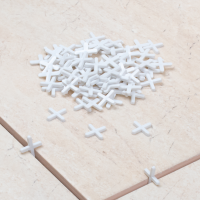
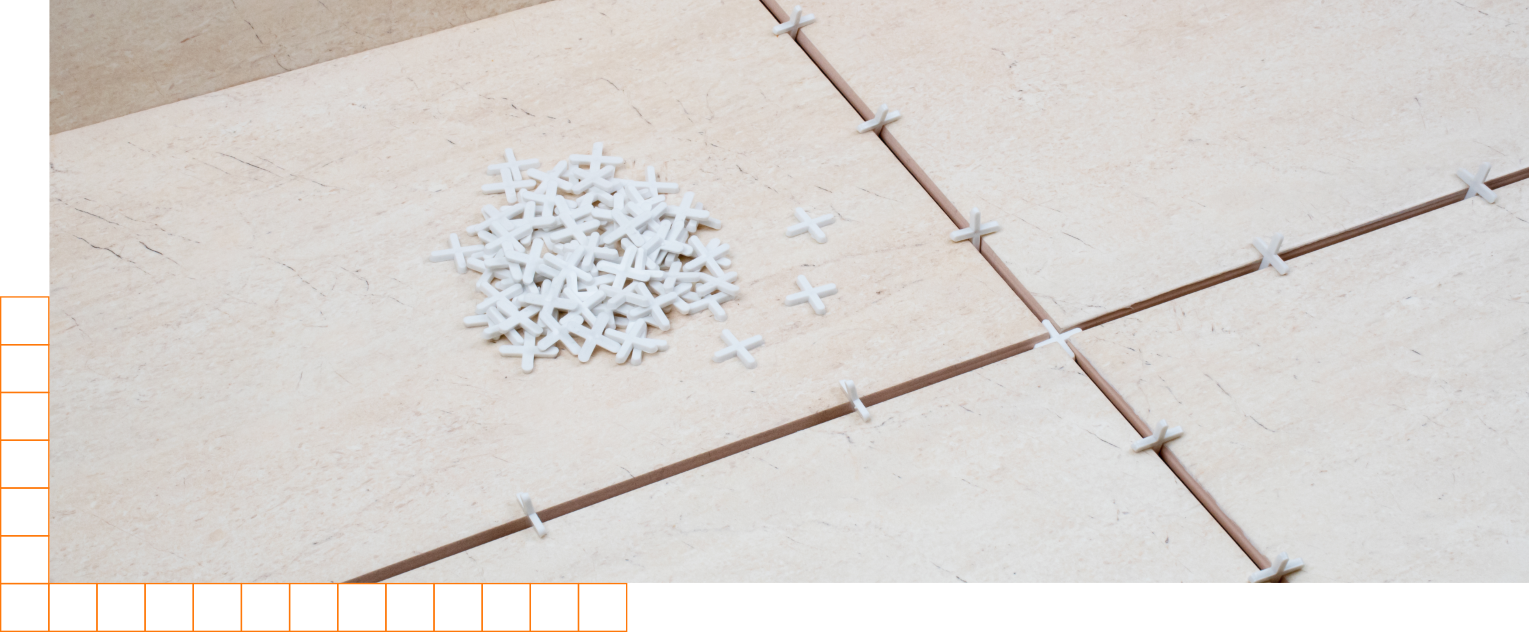
Tile crosses are small plastic accessories designed to create smooth joints when laying ceramic tiles. They differ in shape, thickness, color, but they all perform one function: they fix the seam thickness. In hardware stores, you can buy crosses for tiles with a thickness of 1-10 mm of different types:
- standard cruciform samples, their main field of application is cladding;
- T-shaped crosses, used for laying tiles with an offset or for side seams;
- wedges, used for tiles of non-standard dimensions, most often they are used for wall cladding or steps;
- SVP or 3D inserts, they ideally equalize base errors and create uniform seams of the same thickness.
According to their structure, crosses for leveling tiles are divided into solid and hollow. The first ones are more rigid and do not undergo deformation, the second ones are softer, while they are more convenient to use, since they do not squeeze the glue outward when inserted. When laying tiles, they can be combined. The use of crosses will protect the ceramic joints from swelling during repair work and increase the operational life of the tile.
How to choose crosses for tiles?
Before purchasing remote crosses, you need to consider a number of factors:
- the size and number of seams;
- tile material;
- the number of sides of the tile;
- the level of rigidity of the inserts;
- the presence or absence of chamfers on the tiles;
- quality of plastic crosses;
- brand manufacturer.
They are installed during tiling. Until the adhesive sets, the thickness of the joints can be adjusted. To keep the seams smoother, professional tilers recommend using 4 crosses for each tile.
Thinner patterns help keep the seams neat. For walls, it is worth choosing crosses with a thickness of up to 2 mm; for flooring, it is better to choose products with a thickness of 4-6 mm. If the tiles are uneven, have different thicknesses and sizes, then it is better to use small crosses, they are more versatile in use. If the slab is not of very high quality, then due to the thickness of the jointing, all errors can be eliminated. The crosses can be removed effortlessly, leaving no marks on the seams.
Features of the use of crosses
The number and size of crosses depends on the type of tile and the complexity of the finishing work. So, for the installation of wall tiles in horizontal seams, 2 crosses are enough, laying tiles on the floor requires a larger number of crosses - from 2 to 4 for each edge. On average, the consumption of this material is 40-80 pieces per 1 sq. M. This allows you to calculate in advance the amount of consumables and approximate costs.
Before buying, you should consider the advice of experts:
- Don't skimp on the price. These accessories cost a penny, so buy quality products and in sufficient quantities.
- Choose crosses with jumpers, their ribbed surface is better fixed and creates even seams.
- In addition to crosses, do not forget to buy wedges, thanks to them, the tiles on the walls will not slide down.
In order not to overpay for expensive products from leading European brands, choose crosses from TM Plitkom. They are of high European quality at an affordable price. The range of these products is quite wide, among which you can pick up crosses for any tile laying options. They are sold both separately and complete with SVP. The high-quality base of the SVP made of impact-resistant plastic protects the laid tiles from chips, "crumbling" of seams and accumulation of dirt. With these accessories, a uniform paving height and a fixed joint width are guaranteed. Their use guarantees a uniform laying height as well as a stable fixation of the joint width.
